

ETCS Level 2 on the Rhine Valley Line: A review of the implementation and commissioning between Freiburg and Basel
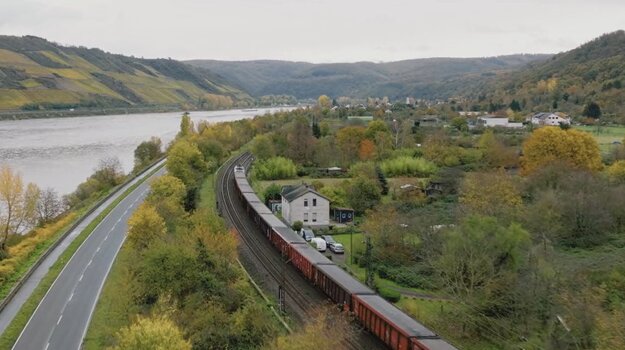
A look back: In August last year, the approximately 80 kilometres of track on the old Rhine Valley Railway between Gundelfingen near Freiburg and Haltingen near Basel were fitted with ETCS Level 2 as part of the project Corridor Rhine-Alpine and brought into service. In a technical article in the journal “Der Eisenbahningenieur”, the authors look back on this project, summarise their experiences and draw their conclusions.
The Freiburg – Basel Rhine Valley Line forms part of the European Corridor Rhine-Alpine and was the first heavily used line to be retrofitted with the European Train Control System Level 2 (ETCS L2) – the standardised European train control system – whilst remaining in operation. Between Gundelfingen and Haltingen, around 80 kilometres of track were fitted out and the ETCS control centres – the so-called Radio Block Centres (RBC) manufactured by Hitachi – were commissioned for the first time in Germany. The project also marks the first triple installation of continuous automatic train control(LZB), intermittent automatic train protection (PZB) and ETCS L2 in Germany.
The technical article provides a comprehensive overview of the project: from conceptual planning and construction through to acceptance runs and commissioning. Integration into the existing infrastructure presented numerous technical challenges, including, for example, a high number of balises, the detailed planning of release speeds at signals, and the first-ever implementation of system transitions between ETCS L2, LZB and PZB. Although parallel mixed operation was successfully implemented, it demonstrated that optimisation potential – such as reducing balises, more flexible planning and the elimination of additional functions – is necessary to reduce effort and complexity. A tool was also developed to evaluate acceptance runs, which displays journey data from the Juridical Recording Unit on Alstom and Siemens traction units. By linking with the PT 2 project planning system, it makes a practical contribution to efficient fault analysis in the field. The acceptance runs ultimately confirmed the system’s functionality.
The experience gained during the project is regarded as a milestone for the migration to ETCS in Germany and provides important insights for the further digitalisation and efficiency improvements of future large-scale projects involving existing and new infrastructure.
Further details on the specific challenges, technical innovations and the outlook for future ETCS projects are described in detail in a technical article (in German only) in the January issue of ‘Der Eisenbahningenieur’.